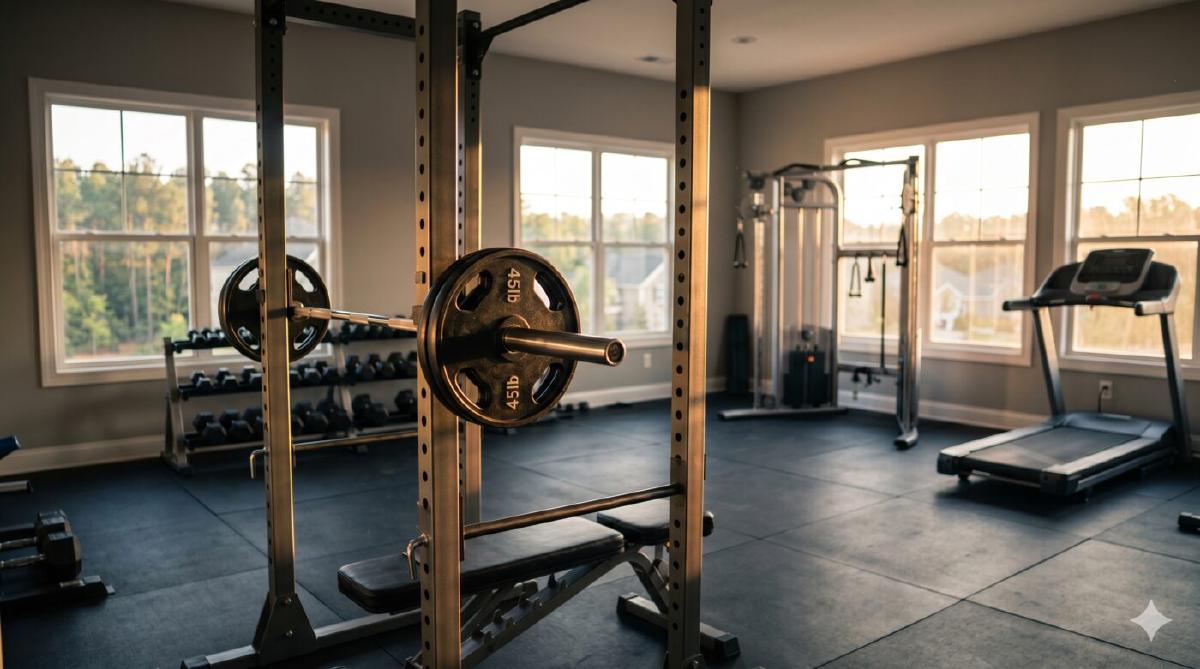
For years, I trained whenever I could fit it into the day.
Sometimes that meant lunch. Sometimes after work. Sometimes not at all.
The problem wasn’t motivation. The problem was that life is unpredictable.
As a Senior DevOps Engineer and Lead Developer, my day can go sideways at any moment. A production issue, emergency deployment, infrastructure outage, urgent code review, or an executive meeting can instantly destroy any plans I had for the afternoon.
Eventually I realized something:
The later I scheduled my workout, the more opportunities existed for it to be cancelled.
That’s what led me to a 5 AM training schedule.
Not because it’s trendy.
Not because some productivity guru told me to wake up before sunrise.
Because it was the only time of day that truly belonged to me.
My Current Schedule#
My weekdays look something like this:
| |
Most people notice two things immediately:
- I train before work.
- I don’t shower immediately afterward.
The second one usually gets more questions than the first.
The reason is simple.
My mornings are about stacking productive activities together while preserving as much time as possible for learning.
By delaying my shower until the evening, I avoid an extra transition period and can move directly into work and study mode.
My Training Split#
I’m currently running a:
| |
Or:
| |
This gives me:
- High training frequency
- Two lower-body sessions per week
- Twice-weekly stimulation for most muscle groups
- Enough flexibility to adjust volume when recovery becomes an issue
As I’ve gotten older, I’ve found that consistency beats perfection.
I no longer care about finding the mathematically optimal split.
I care about finding the split I’ll still be running six months from now.
PPLUL checks that box.
Why 5 AM Works So Well#
The Gym Is Empty#
This alone is almost enough reason.
At 5:45 AM:
- No waiting for equipment
- No crowds
- No social distractions
- No groups occupying half the gym
I can walk in with a plan and execute it.
A workout that might take 90 minutes after work often takes 60–75 minutes in the morning.
The Day Can’t Take It Away#
One of my favorite benefits is psychological.
By 7 AM I’ve already:
- Woken up
- Driven to the gym
- Completed a workout
- Returned home
- Started nutrition
Before most people have had their first cup of coffee.
If the rest of the day turns into chaos, that’s fine.
The workout is already done.
No amount of meetings can take it away.
No production outage can cancel it.
No emergency deployment can derail it.
The biggest task of the day is already complete.
It Creates More Time for Learning#
This was one of the unexpected benefits.
Many people assume waking up earlier means less energy.
What I found was that it created structure.
Instead of trying to figure out when I was going to study, I built education directly into my day.
Every day includes:
Morning Learning#
One hour dedicated to professional growth.
Recently that’s included:
- AWS certifications
- Architecture design
- Infrastructure automation
- Cloud security
- Platform engineering concepts
Evening Learning#
Another focused hour.
Active Recall#
Fifteen minutes reviewing what I learned.
This final piece is probably the most important.
Reading isn’t learning.
Watching videos isn’t learning.
Retention comes from recall.
The daily review dramatically increases how much information sticks.
The Hardest Part: Fasted Training#
The biggest challenge wasn’t waking up.
It was training without food.
Some mornings feel fantastic.
Others don’t.
Especially during:
- Heavy squat sessions
- Deadlift days
- Poor sleep
- Recovery deficits
There are days where I can feel that glycogen levels simply aren’t where I’d like them to be.
For anyone considering morning training, understand that performance may initially suffer.
That’s normal.
Your body needs time to adapt.
The Other Challenge: Sleep#
Everyone wants to wake up at 5 AM.
Very few people want to go to bed at 9 PM.
Those two things are inseparable.
The first few weeks required significant adjustments:
- Earlier dinners
- Less late-night screen time
- More consistency on weekends
- Better sleep hygiene
The workout schedule only works because the sleep schedule supports it.
You cannot continuously trade sleep for productivity.
Eventually the bill comes due.
What I’ve Learned#
The biggest lesson wasn’t fitness related.
It was operational.
As engineers, we’re constantly thinking about reliability.
We build redundant systems.
We automate repetitive tasks.
We remove single points of failure.
Eventually I realized my fitness routine needed the same treatment.
Afternoon workouts depended on too many external factors.
Meetings.
Deployments.
Incidents.
Unexpected work.
Morning training removed those dependencies.
The result wasn’t a better workout.
It was a more reliable system.
And just like in infrastructure engineering, reliability beats theoretical peak performance every single time.
A perfect training plan that gets skipped twice a week is worse than a good training plan executed consistently for years.
The 5 AM schedule isn’t magic.
It’s simply the most reliable way I’ve found to ensure that no matter what happens during the day, I’ve already invested in my health, my education, and my long-term goals before most people have even started work.